
 By guestpostupmy@gmail.com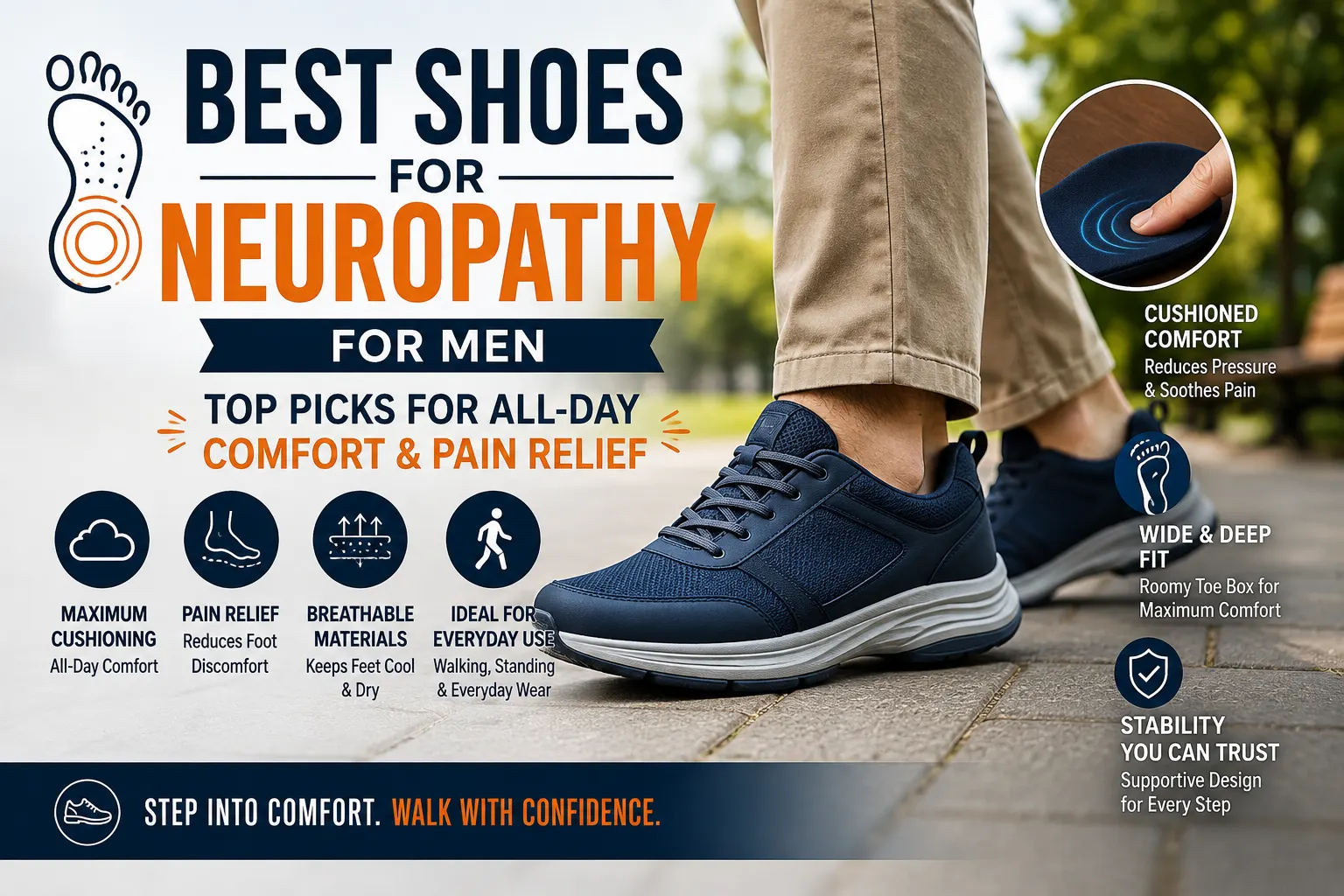
The Shoe You’re Wearing Right Now Might Be Making Things Worse
If you’ve ever stood up after sitting for a while and felt that first step land like you’re walking on hot gravel, you already know why this article exists. Neuropathy doesn’t care what shoe brand is trendy this year. It cares about pressure points, seams, tight toe boxes, and soles that don’t cushion the way your feet need them to anymore.
Here’s the short answer, since you probably don’t want to scroll through 2,000 words to get it: the best shoes for neuropathy have a wide, deep toe box, seamless or minimal-seam interiors, a cushioned rocker-style sole, and closures you can adjust without fighting laces. Brands like New Balance, Orthofeet, Propét, Dr. Comfort, and Brooks show up again and again in podiatrist recommendations for exactly this reason. But which pair actually fits your feet, your budget, and your daily routine is a longer conversation — so let’s have it.
Why Regular Sneakers Don’t Cut It Anymore
I’ll be honest — my father-in-law spent almost two years wearing his old work boots after his diabetic neuropathy diagnosis, insisting they were “broken in” and fine. They weren’t. Broken in doesn’t mean broken for neuropathy. A shoe that felt great five years ago can now be sitting directly on a nerve you can’t feel warning you about it.
That’s the real danger with peripheral neuropathy, especially the diabetic kind. Reduced sensation means you might not notice a blister, a hot spot, or a shoe that’s rubbing until it’s already turned into a sore. So shoe shopping isn’t really about style at that point — it’s risk management that happens to also need to look decent enough to wear to work.
What Actually Makes a Shoe “Neuropathy-Friendly”
Not every “comfort shoe” on the shelf qualifies, no matter what the marketing says. Here’s what to actually check before you buy.
Wide, Deep Toe Box
Your toes need room to sit flat and spread naturally. A narrow toe box compresses nerves and blood vessels, which is the opposite of what you want. Look for shoes labeled “wide” or “extra wide” (2E, 4E, or wider), and don’t assume your old size still fits the same way — feet often change shape over time, especially with diabetic neuropathy.
Seamless or Minimal-Seam Interior
Internal seams rub. If you can’t feel that rubbing happening, it can turn into a wound before you notice. Diabetic-specific shoe lines are usually built with this in mind — that’s genuinely their biggest selling point, more than cushioning.
Cushioned, Supportive Sole
You want shock absorption, but you also want stability. A rocker-bottom sole (slightly curved from heel to toe) helps reduce pressure on the ball of the foot with every step, which matters a lot if you’re on your feet most of the day.
Adjustable Closures
Velcro straps or adjustable laces let you fine-tune fit without cutting off circulation the way a tight lace-up might. This sounds minor until you realize how much daily swelling can change your fit from morning to evening.
Removable Insoles
This one’s underrated. Removable insoles let you swap in orthotics or custom inserts your podiatrist recommends, without buying a whole new shoe.
Best Shoes for Neuropathy for Men
These consistently come up as solid, practical options — not because a brand paid for placement, but because they build to the criteria above.
- New Balance 928v3 – A long-time favorite among podiatrists for good reason. Extra-wide sizing, motion control, and a firm but cushioned midsole that doesn’t feel mushy.
- Orthofeet Men’s Coral Sneakers – Designed specifically for diabetic and neuropathic feet, with a seamless interior and non-binding upper. Not the most stylish option out there, but genuinely comfortable for long shifts.
- Dr. Comfort Ranger – A rugged-looking shoe that still checks every diabetic-shoe box. Good if you want something that doesn’t scream “orthopedic.”
- Propét Stability Walker – Built more like a hiking shoe, with strong ankle support, which some men with neuropathy-related balance issues actually prefer.
- Brooks Addiction Walker – Not marketed as a diabetic shoe specifically, but its wide fit options and motion-control sole make it a common recommendation anyway.
Best Shoes for Neuropathy Women
Women’s neuropathy shoes follow the same rules, but sizing and width options tend to be more limited across brands — which, frankly, is a gap the industry still hasn’t fully closed.
- Orthofeet Women’s Coral Stretch Knit – Stretchable knit upper that adjusts to swelling throughout the day.
- New Balance 928v3 (women’s version) – Same reliable build as the men’s model, extra-wide options available.
- Propét TravelActiv – Lightweight, good for walking, with a roomy toe box that doesn’t sacrifice support.
- Vionic Walker Classic – Built-in arch support that some women with neuropathy find reduces overall foot fatigue by end of day.
Best Walking Shoes for Neuropathy
If daily walking is part of your routine — for exercise, for work, or just getting around — the same features apply, but cushioning and shock absorption matter even more than they do for standing shoes. Look for a rocker sole, breathable mesh uppers (feet swell, and trapped heat doesn’t help), and a heel counter firm enough to prevent your foot sliding around inside the shoe. Skechers Go Walk and ASICS Gel-series shoes come up often here, even though neither is a “medical” brand, simply because their cushioning geometry happens to work well for this.
What About Shoes for Diabetics With Neuropathy Specifically?
This is worth separating out because diabetic feet carry extra risk — wounds heal slower, and infection risk is higher. If you’re diabetic, Medicare and many insurance plans in the US actually cover therapeutic shoes once a year if you meet certain criteria, which most people don’t realize until a podiatrist mentions it. It’s worth asking your doctor directly rather than assuming you don’t qualify.
A Few Honest Caveats
No shoe fixes neuropathy. That needs saying plainly, because some marketing copy out there implies otherwise. The right shoes reduce pressure, prevent injury, and make walking more comfortable — but they don’t reverse nerve damage. Also, “diabetic shoes” aren’t automatically better than a well-fitted regular wide shoe; the label matters less than whether the shoe actually fits your foot shape. And price isn’t a reliable indicator either — some of the more expensive orthopedic brands fit certain feet worse than a $70 New Balance with the right width.
If you have open sores, significant swelling, or foot deformities from long-term neuropathy, talk to a podiatrist before buying anything. Custom orthotics or prescription shoes might genuinely be worth the cost in that situation.
Quick Buying Checklist
- Shop later in the day, when feet are naturally more swollen
- Bring the socks you actually wear daily
- Measure both feet — most people have one slightly larger foot
- Walk around the store, don’t just stand
- Check for a return policy in case the fit feels different after a few hours of wear
Frequently Asked Questions
1. What are the best shoes for neuropathy?
Shoes with a wide toe box, seamless interior, cushioned rocker sole, and adjustable closures — brands like New Balance, Orthofeet, and Dr. Comfort are commonly recommended.
2. What are the best shoes for foot neuropathy?
The same core features apply: extra depth, minimal internal seams, strong shock absorption, and room for orthotic inserts if needed.
3. What are the best shoes for men with neuropathy?
Models like the New Balance 928v3, Orthofeet Coral Sneakers, and Dr. Comfort Ranger are frequently recommended for their wide fit and non-binding design.
4. Are diabetic shoes the same as neuropathy shoes?
Mostly overlapping, but not identical. Diabetic shoes are built with extra attention to wound prevention; neuropathy shoes focus more broadly on pressure reduction and comfort.
5. Can the right shoes reduce neuropathy pain?
They can reduce pressure-related discomfort and prevent injury, but they don’t treat or reverse nerve damage itself.
6. What shoe features should I avoid with neuropathy?
Narrow toe boxes, thin unpadded soles, rigid materials, and any tight lace-up design that restricts circulation.
7. How often should someone with neuropathy replace their shoes?
Roughly every 6-12 months, or sooner if the cushioning feels flattened or the fit no longer matches your foot shape.
8. Are walking shoes different from everyday neuropathy shoes?
Walking shoes typically emphasize more cushioning and a rocker sole for repetitive motion, while everyday shoes may prioritize stability and all-day wear.
9. Does insurance cover shoes for diabetic neuropathy?
In the US, Medicare and some private insurers cover therapeutic shoes annually for qualifying diabetics — ask your doctor about eligibility.
10. What are the best shoes for neuropathy in feet with swelling?
Look for stretchable uppers, adjustable Velcro closures, and removable insoles to accommodate size changes throughout the day.
11. Do compression socks help alongside neuropathy shoes?
Many people find mild compression socks helpful for circulation, but check with a doctor first if you have severe neuropathy or vascular issues.
12. What’s the best shoe width for neuropathy?
Extra-wide (2E-4E) is common, but it depends on your actual foot shape — get measured rather than guessing.
13. Are expensive orthopedic shoes always better?
necessarily. Fit matters more than price; a well-fitted mid-range shoe often outperforms a costly one that doesn’t match your foot shape.
14. Can custom orthotics be used with neuropathy shoes?
Yes, as long as the shoe has a removable insole and enough depth to accommodate the orthotic without crowding the foot.
15. Should I see a podiatrist before buying neuropathy shoes?
If you have diabetes, open sores, deformities, or severe symptoms, yes — a podiatrist can recommend or prescribe shoes suited to your specific condition.