
 By guestpostupmy@gmail.com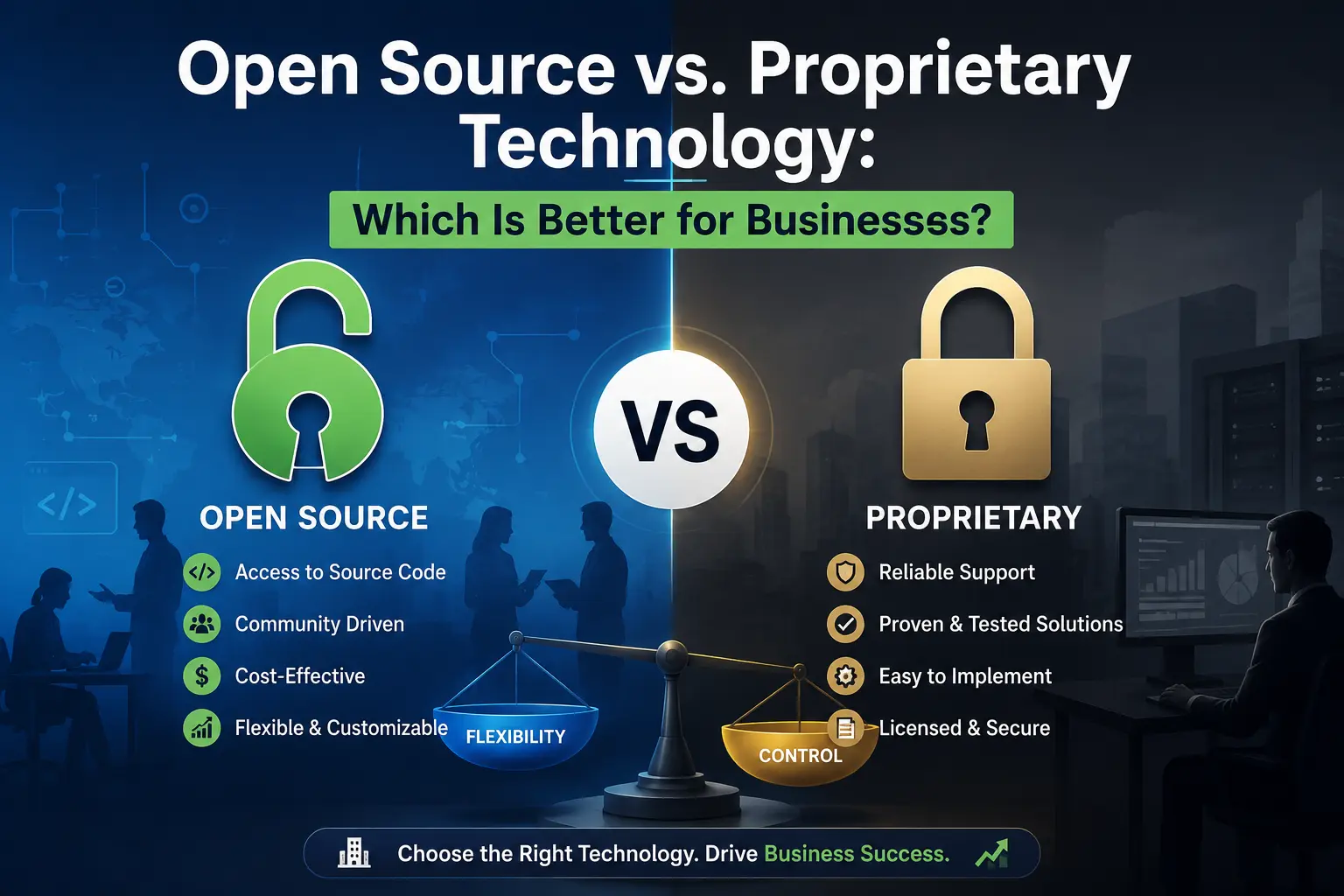
Choosing between open source and proprietary software is a defining decision for any growing business. The right choice dictates your long-term flexibility, operational costs, and security posture. Rather than viewing this as a simple debate of one over the other, businesses must evaluate how each model aligns with their specific technical capacity and strategic goals.
The Flexibility of Open Source Solutions
Open source technology provides full access to the underlying code, granting your internal team the freedom to modify, audit, and integrate the software to fit unique workflows. This transparency is a massive advantage for organizations that require highly customized systems or need to avoid long-term vendor dependency.
-
Customization Control: You are not restricted by the roadmap of a third-party vendor; you can tweak functionalities to solve specific business problems immediately.
-
Reduced Licensing Fees: While implementation and maintenance carry costs, the lack of recurring per-user licensing fees can lead to significant savings as your team scales.
-
Rapid Innovation: Global developer communities often update open source projects at a speed that proprietary vendors struggle to match, providing access to cutting-edge features.
-
No Vendor Lock-in: If your support needs change, you have the ability to switch providers or manage the infrastructure internally, ensuring you retain full ownership of your tech stack.
The Stability of Proprietary Software
Proprietary technology, developed and maintained by a single entity, offers a “done-for-you” experience. You pay for a licensed product that comes with dedicated support, guaranteed uptime, and a user interface designed for mass adoption. For businesses that lack a large in-house engineering team, proprietary tools remove the burden of maintenance and configuration.
-
Dedicated Support: When systems fail, you have a direct point of contact with a contractually obligated support team, reducing the risk of extended downtime.
-
Ease of Use: These platforms prioritize intuitive design and seamless onboarding, which decreases the training time required for new employees.
-
Comprehensive Integration: Proprietary suites are often designed to work effortlessly within their own ecosystem, minimizing the technical friction associated with connecting disparate tools.
-
Defined Roadmaps: You get predictable updates and feature releases, allowing your management team to plan digital growth strategies well in advance.
Balancing Security and Scalability
Security is often the most contentious point in the open-versus-proprietary debate. Open source proponents argue that public code allows thousands of independent security experts to find and fix vulnerabilities, making the platform stronger over time. Conversely, proprietary advocates emphasize that their private, audited codebases are less accessible to malicious actors and provide a single, accountable party responsible for patching exploits.
Scalability presents a different trade-off. Proprietary solutions often offer enterprise-grade scalability out of the box, whereas open source projects may require significant investment in your own hardware and infrastructure expertise to handle massive loads. Ultimately, the best choice depends on whether you have the engineering talent to maintain a custom, open-source stack or if you need the peace of mind that comes with a commercially managed product.
Conclusion
Neither technology model is inherently superior; the right choice is a matter of business capability. If your competitive advantage relies on custom software or proprietary workflows, open source offers the agility you need. If your goal is to minimize technical debt and offload infrastructure management to focus purely on your core business operations, proprietary solutions are often the more efficient path forward.
Frequently Asked Questions
Which option is cheaper in the long run? Proprietary software has clear, predictable licensing costs, while open source often requires higher upfront investment in engineering talent to maintain and customize the system.
Is open source less secure than proprietary software? Not necessarily. Open source relies on community auditing, while proprietary relies on internal security teams; both can be secure if they are managed and patched correctly.
Can I mix both models in my business? Yes, most modern enterprises use a hybrid strategy, utilizing proprietary tools for essential business services and open source frameworks for custom development and specialized tasks.
What is vendor lock-in? It occurs when you rely so heavily on a proprietary software provider that switching to a different tool would be prohibitively expensive or technically complex.
Do I need a large team to run open source software? It helps to have internal technical expertise, as you are responsible for managing updates, security patches, and potential bugs, whereas proprietary vendors handle these tasks for you.