
 By user
Have you ever imagined walking across a snowy landscape, watching the Northern Lights dance above you, or relaxing in a naturally heated hot spring while surrounded by icy scenery? That’s the magic of Iceland in winter!
Located in the North Atlantic, Iceland is a breathtaking destination known for its glaciers, volcanoes, waterfalls, black sand beaches, and dramatic natural landscapes. During winter, the country transforms into a beautiful snowy wonderland, offering unforgettable experiences for adventure lovers, couples, families, and nature enthusiasts.
But what makes Iceland special during the colder months? From exploring natural ice caves to chasing the Aurora Borealis, there are countless reasons to plan a winter holiday here.
In this guide, we’ll explore the best places to visit in Iceland in winter, exciting activities to enjoy, weather conditions, travel tips, and everything you need to plan a memorable trip.
1. Introduction: Experience the Magic of Iceland in Winter
Winter is one of the most fascinating seasons to explore Iceland. Snow-covered mountains, frozen waterfalls, icy coastlines, and shorter daylight hours create a completely different atmosphere from summer.
One of the biggest reasons travelers visit during this season is the opportunity to see the Northern Lights. Iceland is also famous for its natural ice caves, glacier adventures, geothermal pools, and beautiful winter scenery.
Whether you want an adventurous holiday or a peaceful escape surrounded by nature, Iceland offers something for everyone.
The key is planning your itinerary carefully because winter weather can affect road conditions, transportation, and outdoor activities.
2. Why Visit Iceland During Winter?
There are several reasons why winter is an excellent time to discover Iceland.
First, you have opportunities to experience the Northern Lights, one of nature’s most spectacular displays. Second, winter offers access to seasonal attractions such as natural ice caves and snow-covered landscapes.
Another major attraction is Iceland’s geothermal bathing culture. Imagine relaxing in warm mineral-rich water while cold winter air surrounds you. It’s an experience you won’t forget easily!
Winter can also bring fewer visitors to some attractions compared with the busy summer season, although Christmas and New Year remain popular travel periods.
3. Best Places to Visit in Iceland in Winter
Iceland has many incredible destinations, each offering a different experience. Here are some of the best places to include in your winter itinerary.
3.1 Reykjavik – Explore Iceland’s Charming Capital
Reykjavik is the perfect starting point for your Iceland adventure.
The capital city combines colorful buildings, modern architecture, interesting museums, and a lively food scene.
Some popular attractions include:
- Hallgrímskirkja Church
- Harpa Concert Hall
- Sun Voyager Sculpture
- Perlan Museum
- Laugavegur Shopping Street
You can explore local cafés, try traditional Icelandic dishes, and enjoy the city’s cozy winter atmosphere.
Reykjavik is also an excellent base for joining Northern Lights tours and visiting nearby geothermal attractions.
3.2 Blue Lagoon – Enjoy a Relaxing Geothermal Spa
The Blue Lagoon is one of Iceland’s most famous attractions.
Located in a volcanic landscape on the Reykjanes Peninsula, this geothermal spa is known for its milky-blue water and relaxing atmosphere.
During winter, the contrast between warm water and chilly outdoor temperatures makes the experience especially memorable.
Visitors can enjoy geothermal bathing, spa treatments, and beautiful volcanic surroundings.
Advance reservations are recommended because the Blue Lagoon is a popular attraction. Always check current access and operational information before visiting, as volcanic activity in the Reykjanes region can affect local conditions.
3.3 Golden Circle – Discover Iceland’s Natural Wonders
The Golden Circle is one of the most popular sightseeing routes in Iceland.
It connects three major attractions:
- Þingvellir National Park: A UNESCO World Heritage Site known for its geological features and historical importance.
- Geysir Geothermal Area: Famous for geothermal activity and Strokkur, which regularly erupts.
- Gullfoss Waterfall: A spectacular waterfall that becomes particularly beautiful when surrounded by winter ice and snow.
The route is ideal for first-time visitors who want to experience several of Iceland’s most famous attractions in one day.
3.4 Jökulsárlón Glacier Lagoon – Witness Floating Icebergs
Jökulsárlón Glacier Lagoon is one of the most beautiful natural attractions in Iceland.
Located in southeastern Iceland, this glacier lagoon is filled with floating icebergs that break away from the nearby Breiðamerkurjökull glacier.
During winter, the surrounding landscape becomes even more dramatic, with ice formations and snow-covered scenery.
You can enjoy incredible photography opportunities and observe the changing shapes and colors of the icebergs.
Always follow local access instructions and avoid entering restricted glacier or lagoon areas.
3.5 Diamond Beach – See the Beauty of Ice on Black Sand
Located near Jökulsárlón Glacier Lagoon, Diamond Beach is famous for chunks of ice scattered across its black volcanic sand.
The transparent and blue ice creates a beautiful contrast against the dark shoreline, making it one of Iceland’s most photographed locations.
It is a fantastic place for photography enthusiasts and travelers who enjoy unusual natural landscapes.
However, be careful around the waves and never climb onto icebergs or floating ice.
3.6 Vík – Explore Iceland’s Dramatic Black Sand Beaches
Vík is a charming coastal village in southern Iceland, surrounded by spectacular natural scenery.
Its most famous attraction is Reynisfjara Black Sand Beach, known for its dark volcanic sand, basalt columns, and dramatic sea stacks.
The nearby Reynisdrangar rock formations create an unforgettable coastal landscape.
Vík is also a convenient base for exploring southern Iceland’s waterfalls, glaciers, and coastal attractions.
One important safety reminder: Reynisfjara is known for dangerous sneaker waves. Always stay well away from the water and follow beach safety warnings.
3.7 Snæfellsnes Peninsula – Discover Iceland in Miniature
The Snæfellsnes Peninsula is often described as Iceland in miniature because it features many of the country’s most famous landscapes in one region.
Here, you can discover volcanic mountains, coastal cliffs, fishing villages, lava fields, and beautiful beaches.
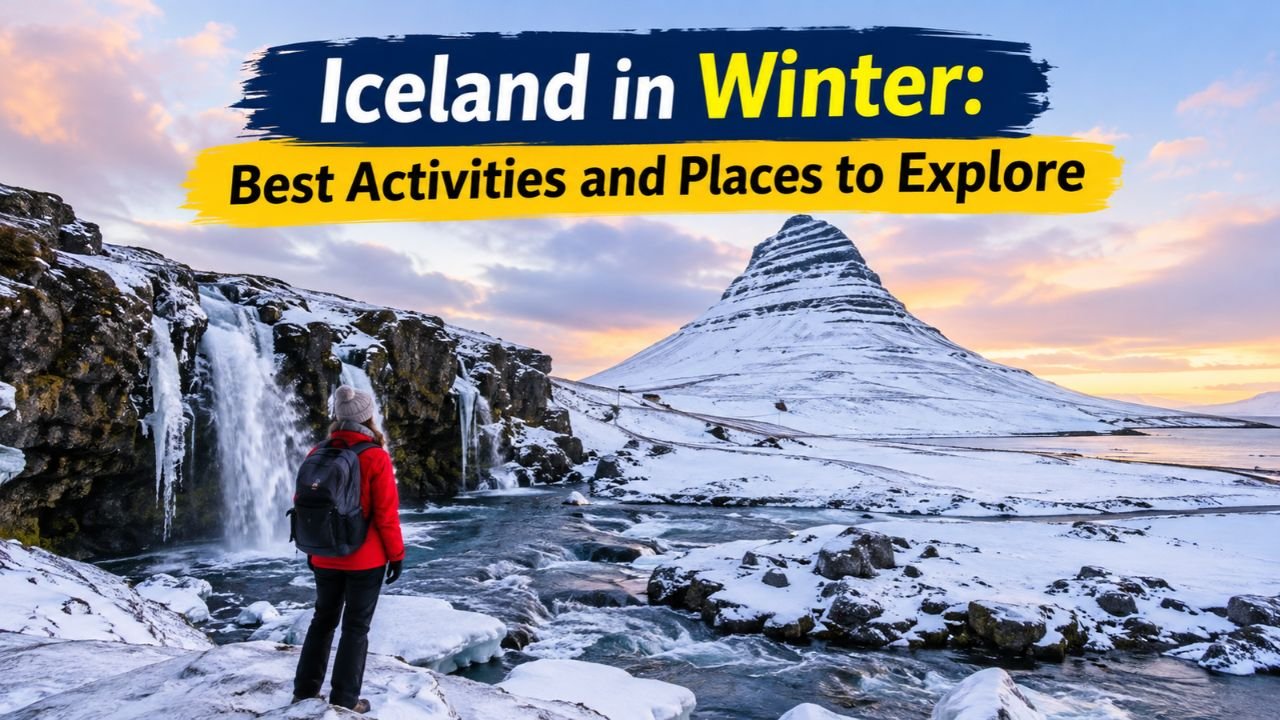
Kirkjufell Mountain is one of the most recognizable landmarks in the region, particularly when photographed with the nearby waterfall.
The peninsula is a wonderful destination for travelers who want to explore Iceland’s diverse scenery beyond the Golden Circle.
3.8 Akureyri – Experience Northern Iceland
Akureyri is one of the most important towns in northern Iceland.
Surrounded by mountains and located near Eyjafjörður fjord, it offers a peaceful atmosphere and access to several winter adventures.
You can explore local museums, visit the botanical garden when conditions allow, enjoy cozy cafés, and discover nearby ski areas.
Akureyri is also a useful base for exploring northern Iceland and joining seasonal excursions.
4. Best Winter Activities to Enjoy in Iceland
Visiting Iceland during winter is not just about sightseeing. The season offers plenty of exciting outdoor experiences.
4.1 Watch the Northern Lights
The Northern Lights are one of the biggest attractions in Iceland during winter.
This natural light display occurs when charged particles from the Sun interact with Earth’s atmosphere.
From late September to early April, visitors have opportunities to see the Aurora Borealis when skies are dark and conditions are favorable.
Some excellent viewing areas include:
- Thingvellir National Park
- Vík and the southern coast
- Akureyri and northern Iceland
- Snæfellsnes Peninsula
For the best chances, look for clear skies, low light pollution, and favorable Aurora forecasts.
Remember that Northern Lights sightings are never guaranteed, so consider spending several nights in Iceland if this experience is important to you.
4.2 Explore Natural Ice Caves
Exploring natural ice caves is one of the most extraordinary winter experiences in Iceland.
These caves form within glaciers, creating beautiful blue ice walls, unusual formations, and fascinating textures.
Vatnajökull National Park is particularly famous for seasonal glacier ice cave experiences.
Because glacier environments can change rapidly, visitors should only explore ice caves with qualified guides using appropriate safety equipment.
4.3 Go Glacier Hiking
Want to experience Iceland’s icy landscapes up close?
Glacier hiking offers an opportunity to walk across ancient ice formations while discovering crevasses, ice patterns, and impressive mountain scenery.
Popular guided glacier hiking areas include Sólheimajökull and Vatnajökull.
You don’t need to be an experienced mountaineer for every beginner-friendly tour, but suitable clothing, footwear, and professional guidance are essential.
4.4 Enjoy Snowmobiling Adventures
Snowmobiling is another exciting way to explore Iceland’s winter scenery.
You can ride across selected glacier areas and enjoy panoramic views of snowy mountains and vast icy landscapes.
Popular snowmobiling experiences are available around Langjökull Glacier and other suitable areas.
Most tours include safety instructions, protective equipment, and a professional guide.
4.5 Relax in Geothermal Hot Springs
Iceland is famous for its geothermal energy, and visiting a hot spring is one of the most relaxing activities you can enjoy during winter.
Apart from the Blue Lagoon, travelers can explore attractions such as the Sky Lagoon and Mývatn Nature Baths.
Some natural hot springs are located in remote areas, so check access conditions and local safety guidance before visiting.
4.6 Experience Whale Watching
Although whale watching is often associated with warmer months, winter can also provide opportunities to observe marine wildlife in Iceland.
Reykjavik and northern destinations such as Akureyri offer seasonal whale-watching excursions.
Depending on the location and season, you may spot humpback whales, dolphins, and other marine species.
Weather conditions can affect departures, so check with tour operators before booking.
5. What Is the Weather Like in Iceland During Winter?
Winter in Iceland generally runs from November through March, although cold and changeable weather can occur outside these months.
Temperatures along the coast are often around freezing, while inland and northern areas can experience colder conditions.
You should also expect:
- Strong winds
- Snowfall and icy roads
- Short daylight hours
- Rapid weather changes
- Occasional storms
Daylight is especially limited around December, while daylight hours gradually increase from January onward.
The best approach is to plan flexible activities and check local weather and road conditions every day.
6. Best Time to Visit Iceland in Winter
The best winter month depends on the experiences you want.
November: A good time to begin winter sightseeing and search for the Northern Lights, with increasingly dark evenings.
December: Perfect for festive experiences, Christmas celebrations, and snowy scenery, although daylight hours are very short.
January: A quieter period in some destinations, with opportunities for ice cave tours and Northern Lights excursions.
February: A popular month for winter adventures, glacier activities, and longer daylight compared with December.
March: Offers a useful balance between winter scenery, increasing daylight, and opportunities to see the Aurora.
For travelers interested in ice caves, remember that access depends on glacier conditions and official tour availability rather than the calendar alone.
7. What to Pack for a Winter Trip to Iceland
Packing correctly can make your winter holiday much more comfortable.
Iceland’s weather can change quickly, so dressing in layers is essential.
Here are some important items to bring:
- Thermal base layers
- Waterproof winter jacket
- Insulated trousers
- Warm gloves and winter hat
- Waterproof hiking boots
- Wool socks
- Scarf or neck warmer
- Comfortable winter clothing
- Swimsuit for geothermal spas
- Portable power bank
Good-quality waterproof clothing is particularly important because rain, snow, and strong winds are common.
8. How to Plan Your Iceland Winter Holiday
A well-organized itinerary can help you enjoy more experiences while avoiding unnecessary travel stress.
8.1 Choose Your Travel Destinations
Start by deciding which parts of Iceland you want to explore.
For first-time visitors, Reykjavik, the Golden Circle, and southern Iceland are excellent starting points.
If you have additional days, consider exploring the Snæfellsnes Peninsula or northern Iceland.
Avoid trying to cover the entire Ring Road during a short winter holiday because road conditions and limited daylight can make long journeys challenging.
8.2 Arrange Transportation and Accommodation
You can explore Iceland using rental cars, guided tours, buses, and domestic flights.
A rental car provides flexibility, but winter driving requires experience, proper preparation, and awareness of road conditions.
For travelers unfamiliar with icy roads, guided excursions can be a safer and more convenient option.
Book accommodation in advance, especially in popular destinations during Christmas, New Year, and peak Northern Lights season.
8.3 Why Choose an Iceland DMC?
Planning a winter holiday in Iceland involves several details, including accommodation, transportation, seasonal activities, and local experiences.
Working with an Iceland DMC (Destination Management Company) can help coordinate these arrangements.
A destination management company may assist with customized itineraries, hotel bookings, guided excursions, group travel, and local supplier coordination.
This can be especially useful for families, corporate groups, couples, and international travelers looking for a well-organized holiday.
How Tkwd DMC Can Support Your Travel Planning
Tkwd DMC is another relevant secondary keyword for destination management and travel-planning content.
When exploring DMC services for an Iceland holiday, travelers should consider local destination knowledge, itinerary customization, accommodation options, activity coordination, and customer support.
Before choosing a provider, verify its Iceland-specific experience, available services, customer reviews, and ability to arrange winter activities.
A suitable travel partner can make it easier to coordinate your trip, particularly when several destinations and seasonal excursions are involved.
9. Essential Safety Tips for Visiting Iceland in Winter
Winter travel in Iceland is exciting, but safety should always come first.
Keep these important tips in mind:
- Check road conditions: Visit the official Icelandic road information service before driving.
- Monitor weather forecasts: Strong winds and sudden storms can affect your plans.
- Avoid dangerous coastal areas: Never underestimate sneaker waves at beaches such as Reynisfjara.
- Use professional glacier guides: Never explore ice caves or glaciers independently.
- Carry emergency supplies: Keep warm clothing, food, water, and a charged phone in your vehicle.
- Allow extra travel time: Snow and icy roads can make journeys slower.
- Keep your itinerary flexible: Change your plans if weather conditions become unsafe.
For official updates, check Iceland’s weather service, road administration, and SafeTravel information before and during your journey.
10. Conclusion: Make Your Iceland Winter Holiday Unforgettable
Iceland in winter is a destination filled with extraordinary landscapes and unforgettable adventures. From watching the Northern Lights and exploring natural ice caves to relaxing in geothermal hot springs, every experience offers a different way to discover the country’s beauty.
Reykjavik, the Golden Circle, Jökulsárlón Glacier Lagoon, Diamond Beach, Vík, and the Snæfellsnes Peninsula are excellent places to include in your itinerary.
The secret to enjoying Iceland during winter is simple: prepare for changing weather, choose suitable activities, prioritize safety, and allow enough time to explore.
Whether you organize your holiday independently or work with a suitable Iceland DMC, thoughtful planning can make your journey smoother and more enjoyable.
Pack your warmest clothes, bring your camera, and get ready to discover the magical beauty of Iceland in winter!
FAQ
Q1. Is Iceland Worth Visiting in Winter?
Absolutely! Iceland is an incredible winter destination, offering opportunities to see the Northern Lights, explore ice caves, enjoy glacier hikes, visit waterfalls, and relax in geothermal hot springs. Its snowy landscapes create a completely different experience from summer.
Q2. What Is the Best Month to Visit Iceland in Winter?
February and March are excellent months for winter activities because they offer a combination of snowy scenery, Northern Lights opportunities, and gradually increasing daylight. However, November through March can all be suitable depending on your travel interests.
Q3. Can You See the Northern Lights in Iceland During Winter?
Yes, winter is one of the best periods to see the Northern Lights in Iceland. The Aurora season generally runs from late September to early April. Clear skies, darkness, and favorable solar activity improve your chances of witnessing this natural phenomenon.
Q4. How Many Days Are Enough for an Iceland Winter Trip?
Around 5 to 7 days is a good starting point for exploring Reykjavik, the Golden Circle, and parts of southern Iceland. If you want to explore northern Iceland or additional regions, consider planning 8 to 10 days or longer.
Q5. Is It Safe to Drive in Iceland During Winter?
Driving in Iceland during winter can be challenging because of snow, ice, strong winds, and changing road conditions. Experienced winter drivers should check official road updates, use an appropriate vehicle, and remain flexible. First-time winter visitors may find guided tours more convenient.