
 By guestpostupmy@gmail.com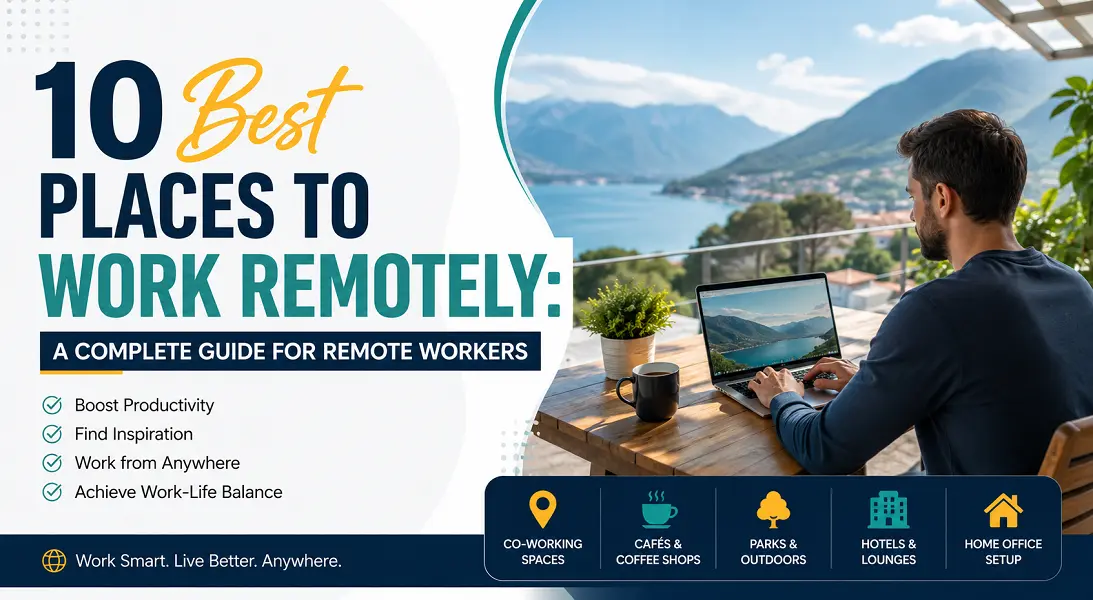
I’ve spent the last few years bouncing between a spare bedroom, a noisy café, a co-working space that smelled permanently of burnt coffee, and — for one memorable month — a friend’s balcony in Goa. So when people ask me what the best places to work remotely actually are, I don’t answer with a textbook list. I answer with what actually worked, what didn’t, and what I’d tell a friend before they waste money on a “digital nomad hub” that turns out to be all Instagram and no Wi-Fi.
If you’re short on time, here’s the quick answer: the best place to work remotely depends on three things — reliable internet, a workspace that doesn’t wreck your back, and a routine that separates “home” from “office” even when they’re the same room. Beyond that, it’s really about matching the environment to how you personally focus. Some people need silence. Some need background noise. Some need to physically leave the house or they’ll never open their laptop.
Let’s get into the actual places — both the “near me” everyday spots and the bigger destinations people dream about.
What Is the Best Place to Work Remotely Near Me?
This is probably the question you actually typed into Google, so let’s answer it first instead of making you scroll.
The best place to work remotely near you usually isn’t your bed (sorry). It’s one of these, roughly in order of how well they tend to work for most people:
- A dedicated co-working space — even a small local one. You’re paying for structure as much as desks.
- A library with decent Wi-Fi — free, quiet, and nobody expects you to buy a coffee every ninety minutes.
- A café during off-peak hours — good for short bursts of work, terrible for back-to-back Zoom calls.
- A friend or family member’s spare room — underrated, honestly, if they’re not home during the day.
- Your own home, but a different room than usual — sounds silly, but changing the physical space resets your brain’s “work mode” surprisingly well.
I tested this myself for about six weeks. Working exclusively from bed versus working from a rented desk at a co-working space, my actual output (measured crudely, by how many tasks I finished before 6 PM) was almost double at the co-working space. Not because the desk was magic — because I couldn’t check Netflix without it being a whole production.
The 10 Best Places to Work Remotely (Ranked by What They’re Actually Good For)
Here’s where it gets a bit more ambitious — places people travel to specifically because they’re set up for remote work.
1. Lisbon, Portugal
Fast internet, a genuinely huge remote-work community, and it’s cheaper than most Western European capitals. The downside nobody mentions: the co-working scene has gotten crowded enough that some popular spots need booking a week ahead now.
2. Chiang Mai, Thailand
The original “digital nomad capital,” and it earns the reputation. Cost of living is low, cafés are built for laptop work, and there’s a huge support network of other remote workers. Rainy season (roughly June to October) can mess with power and internet stability, so plan around it if you can.
3. Bali, Indonesia (specifically Canggu or Ubud)
Gorgeous, yes, but also genuinely functional if you pick the right neighborhood. Canggu has co-working spaces built specifically for remote teams. The catch: time zones can be brutal if your team is in the US.
4. Mexico City, Mexico
Underrated for North American remote workers because of the time zone overlap. Great food, solid internet in most central neighborhoods, and it’s become a real hub for remote-only companies’ team meetups.
5. Tbilisi, Georgia
Visa-friendly, cheap, and quietly becoming one of the best places to work remotely for people who want somewhere less “touristy” than Bali or Lisbon. Internet speeds in the city center are genuinely fast.
6. Medellín, Colombia
“Eternal spring” weather makes a bigger difference to focus than you’d think — no oppressive heat draining your energy by 2 PM. Solid co-working infrastructure has grown a lot in the last few years.
7. Budapest, Hungary
Central European time zone, walkable city, and noticeably cheaper than Western Europe while still having reliable infrastructure. A slightly overlooked pick compared to Lisbon or Berlin.
8. Da Nang, Vietnam
Beach access plus a growing remote-work scene without Bali-level crowds or prices. Internet can be inconsistent outside the main areas, so check your accommodation’s actual speed test before committing.
9. Cape Town, South Africa
Time zone works well for European teams, the co-working culture is strong, and it’s dramatically cheaper than European cities with similar quality of life. Safety planning matters more here than in most other spots on this list — worth researching neighborhoods properly.
10. Your Own City (seriously)
I’m not being cute here. Plenty of “best places to work remotely near me” searches end with people realizing the answer was a decent local co-working membership all along, minus the flight costs, visa admin, and time-zone headaches. If your current city has fast internet and a couple of good work spots, that might beat any destination on this list.
Best Companies to Work for Remote (If Location Is the Whole Point)
If the goal isn’t a destination but a lifestyle — actual remote-only companies — a few names come up constantly among people I know in this space: companies built remote-first from day one tend to handle async communication, time-zone overlap, and home-office stipends far better than companies that “went remote” during the pandemic and never fully adjusted their processes. When job-hunting, I’d actually ask in the interview how long the company has been remote — not just whether it currently allows it. That answer tells you a lot about whether remote work there is a genuine culture or a policy bolted on afterward.
What Actually Makes a Place Good for Remote Work
Beyond the destination hype, a handful of practical things matter more than people expect:
- Internet speed AND stability. 100 Mbps that drops out twice a day is worse than a steady 30 Mbps.
- Time zone overlap with your team. A beautiful location loses its charm fast when you’re taking calls at 3 AM.
- Cost of living versus your income. Some “cheap” destinations aren’t actually cheap once you factor in visa runs and co-working fees.
- Legal work status. Not every country’s tourist visa technically permits remote work — some now offer dedicated digital nomad visas, which is worth checking before you book anything.
- Social connection. Loneliness is the most underrated remote-work problem. The best places to work remotely tend to be the ones with an existing community, not just good Wi-Fi.
A Quick Word of Caution
Not every “best places to work remotely” list you’ll find online is written by someone who’s actually lived in these places. Some are recycled from other articles with zero firsthand experience behind them. Before you commit to a destination, check recent reviews from actual remote workers — Reddit threads and nomad-specific forums tend to be more honest than polished blog posts, including this one. Conditions change fast: internet infrastructure improves, visa rules shift, and prices creep up as places get popular.
Final Thought
There’s no single “best” place — there’s a best place for how you work. If you thrive on structure, a co-working space in a city with good infrastructure beats a beach hut every time. If you need change and stimulation, a rotating list of destinations might genuinely make you more productive, not less. Try one option for a month before assuming it’s the answer. That’s the only way I’ve found to actually know.
FAQs
1. What is the best place to work remotely near me?
Usually a local co-working space or library beats working from home, mainly because it creates a physical boundary between “work” and “not work.”
2. What are the best places to work remotely for beginners?
Cities with an established remote-work community — like Lisbon or Chiang Mai — are easier to start in since there’s infrastructure and other remote workers to learn from.
3. Is it cheaper to work remotely abroad or from home?
It depends on your home country’s cost of living. For people in the US, UK, or Western Europe, many popular remote-work destinations are cheaper. For others, it may not be.
4. What internet speed do I need to work remotely?
At minimum, 25 Mbps download for video calls without lag. Stability matters more than raw speed — test before you commit to a location.
5. Do I need a visa to work remotely from another country?
Often yes, technically. Many countries now offer digital nomad visas specifically for this. Working on a tourist visa is common but not always strictly legal.
6. What are the best remote-only companies to work for?
Companies that started remote-first (rather than transitioning during the pandemic) tend to have more mature remote processes, better async communication, and clearer home-office support.
7. Are co-working spaces worth the cost?
For most people, yes — the productivity gain from a dedicated workspace usually outweighs the membership fee, especially compared to the cost of wasted work hours.
8. What’s the best time zone for remote workers?
Whatever overlaps most with your team’s core hours. A “great” location in the wrong time zone can quietly wreck your work-life balance.
9. Can I work remotely from a different country than my employer?
Sometimes — depends on your employer’s policy and the destination country’s tax and visa rules. Always confirm with HR before assuming it’s fine.
10. What’s the biggest downside of working remotely from a new country?
Loneliness and lack of routine, more than logistics. People underestimate how much workplace structure they lose.
11. Is Bali still good for remote work in 2026?
Yes, especially Canggu, though it’s more expensive and crowded than a few years ago. Ubud remains a quieter alternative.
12. What’s a budget-friendly place to work remotely?
Tbilisi, Da Nang, and Medellín consistently offer lower costs without sacrificing internet reliability.
13. How do I find fully remote companies hiring right now?
Remote-specific job boards tend to list more genuinely remote-first companies than general job sites, where “remote” sometimes means “hybrid” in disguise.
14. What’s the best place to work remotely if I have a family?
Prioritize destinations with stable healthcare access and established expat communities — Mexico City and Lisbon tend to score well here.
15. Should I choose a place based on cost or community?
Community, if you can afford it. Loneliness derails more remote careers than budget does.